
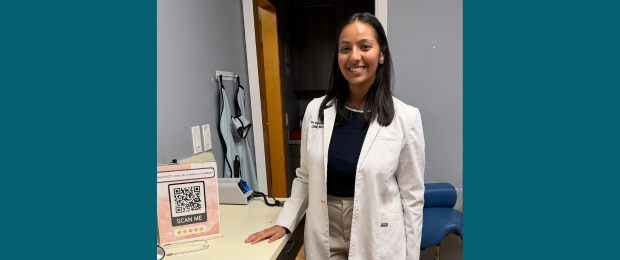
Shaping a Niche Practice: Dr. Bijal Shah’s Innovative Rental-Model for TMD & Orofacial Pain Care
When Dr. Bijal Shah graduated from Rutgers School of Dental Medicine’s DMD program in May 2022, she already had her sights set on something different: a private-practice model focused on temporomandibular disorders (TMD) and orofacial pain. She immediately entered a two-year master’s program in TMD and Orofacial Pain and continued practicing general dentistry during that time to gain firsthand experience of what it takes to launch a dental business.
“While completing the master’s program,” she shared, “I wanted to see the practice side of general dentistry and at the same time learn how TMD/orofacial pain care differs — the workflow, the referral base, the patient needs.”
Upon finishing the program in June 2024, Dr. Shah recognized a critical gap in New Jersey: few providers dedicated exclusively to TMD/orofacial pain in private practice. Instead of joining a conventional general-practice model or purchasing a full office, she opted for a rental model — operating within existing dental practices and renting operatories on select days.
Building the Practice Framework
In considering her business model, Dr. Shah evaluated several key components:
- Equipment: She determined that at minimum she needed a panorex imaging machine, an intraoral scanner for digitized records, and a private operatory with a cabinet/sink.
- Staffing: She planned for one staff member present in the office who could handle phones/scheduling, with many administrative responsibilities remaining under her own oversight.
- Materials & Costs: Her model would rely on a robust patient-record platform, minimal base equipment for evaluations, mainly disposable supplies for treatments, and few items requiring sterilization.
- Location Strategy: She evaluated underserved areas in New Jersey for TMD/orofacial pain care—though with a fee-for-service (FFS) model, cost-access can be a challenge.
- Liability: Robust record-keeping and compliance with patient-data requirements had to be factored in.
Why the Rental Model?
For Dr. Shah, the rental model offered the perfect balance between independence and practicality. It allowed her to run her own practice schedule and maintain autonomy without being tied to an associate position in a general dental office. Because TMD and orofacial pain management rely more heavily on medical billing and coding than on traditional dental workflows, this setup provided the flexibility she needed to operate independently. The model also provided a low-cost, lower-risk way to enter private practice, enabling her to test her business concept, build a referral network, and gather valuable data before committing to a permanent space.
How She Found Her Locations
Networking was key to making the rental model work. “Huge thanks to NJDA and the Middlesex County Dental Society for giving me the opportunity to meet and connect with so many great practitioners who offered their locations to me!” Dr. Shah said. Through these professional connections, she identified offices that had the imaging technology and equipment she required, often specialty practices that had extra operatories or were closed on certain days of the week. Attending local meetings and engaging with colleagues opened doors to collaborations that made her multi-site model both feasible and successful.
Pros & Cons of the Model
Pros
- Low‐cost, low‐risk entry into private specialist practice.
- Ability to test market viability in real time with location/referral data.
- Strong professional connections with host practitioners.
- No need to hire full in-house staffing initially.
- Clear separation of business operations (distinct phone lines, EMR systems, etc.
Cons
- Developing systems for support (administrative workflows, scheduling) is more challenging.
- Operating across three locations can be confusing to patients.
- Handling emergencies is difficult unless patients are willing to travel.
- Managing phones/scheduling while seeing patients adds to the workload.
Looking Ahead
Dr. Shah has now been in practice with this start-up model for a year. She reports having gathered solid data on which locations and referral networks work best for her type of care. With a growing patient base, established referral network, and accumulating capital, she is now considering transitioning into a more permanent, standalone location.
Her message to emerging specialists: “Don’t be afraid to forge a non-traditional path. The flexibility of this model gave me space to build something sustainable in a field that’s still expanding.”
Dr. Shah’s story is a compelling example of how creativity and strategic planning can open meaningful opportunities in dental specialties. By leveraging the supportive NJDA network and adapting a rental-based practice model, she is providing much-needed TMD and orofacial pain care across New Jersey.
