
Add to:
Member Input Needed
Learn about a proposed new approach to supporting insurance participation, reimbursement, credentialing, and more at a Regional Member Meeting this month.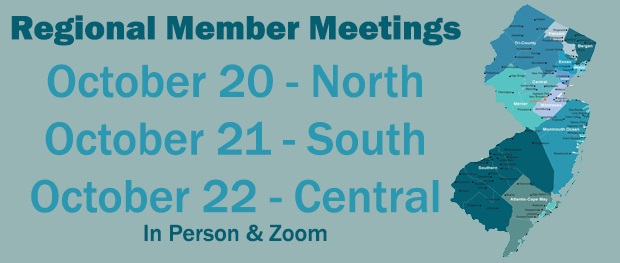
New Member Benefit Coming Soon
NJDA is excited to announce a new member benefit at the November 4 House of Delegates Meeting… watch this short video (0:45) for a hint!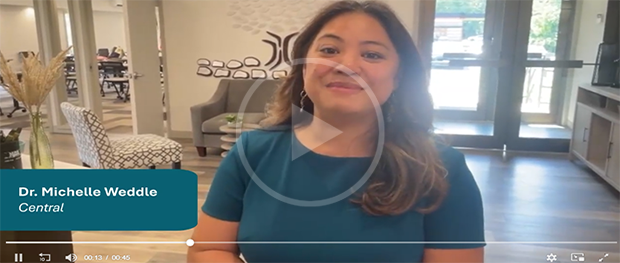
Innovation, Education & Connection at GNYDM 2026!
Explore the latest dental innovations, earn CE, network, and register FREE!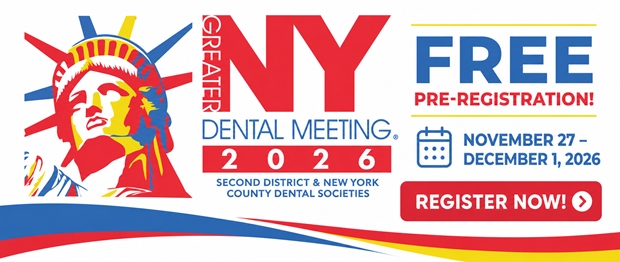
Fall Membership Drive
Get a jump start on 2027 - join local, state, and national now with no payment until January!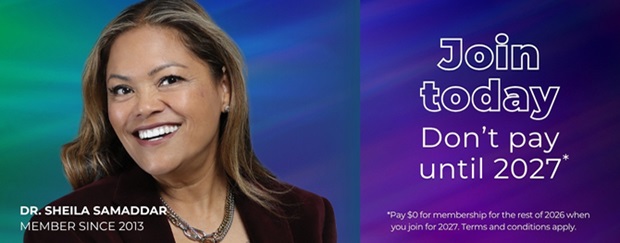
Save Time & Money on Dental Compliance
Provide flexible online training for the entire team, create required HIPAA and OSHA manuals and documentation, access compliance resources and more for one low price. Through December 31, 2026, New Jersey dental offices can take advantage of Early Adopter pricing on the first year of ComplyBetter NJDA.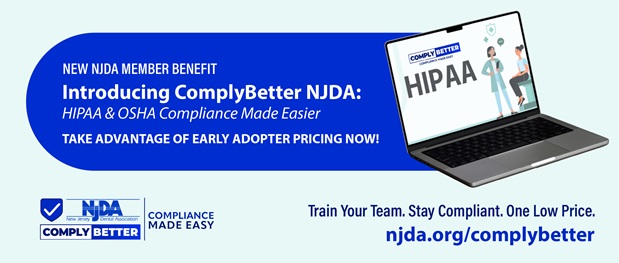
Make a Difference in Care
Help patients with special needs find a dental home. Join the NJDA’s Special Needs Provider List and connect your practice with patients and families seeking care. Sign up today.
Master Claim Appeals & Radiograph Coding
Join us November 17 at 1:00 PM for Session 4 of the Dental Claims & Coding Exchange! Dilaine Gloege, CDA, CPC, will cover claim denials and appeals plus radiograph coding and frequency limits to help your team navigate common claims and coding challenges.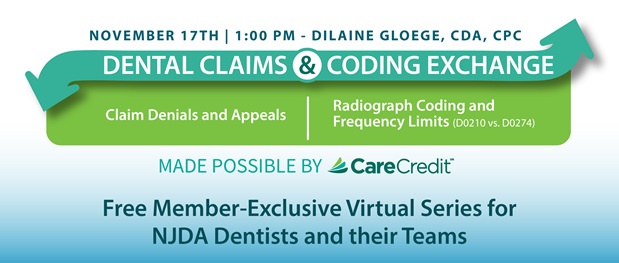
Helping Members Succeed
The New Jersey Dental Association is the voice of the dental profession and a strong proponent of oral health in the state. Members are part of a vibrant community of dentists encompassing 12 local dental societies as well as the American Dental Association. Members engage in educational programs, have access to dentist-centric relationships and tools to navigate the business of dentistry and their careers, as well as benefit from dedicated advocacy that protects the interests of the profession. The organization is run by member-dentists with the support of a team of professionals at NJDA Headquarters. NJDA members never practice alone!
UPCOMING EVENTS
Add to:
Add to:
DENTAL NEWS AND NOTES

Understanding Network Leasing, Network Vendors, and Network Administrators in New Jersey
This article clarifies the differences between network leasing, network vendors, and network (system) administrators, while referencing ADA resources and New Jersey statutes that govern these arrangements.
What NJ Dentists Need to Know About These Increasingly Common Dental Benefit Models
Dental insurance networks have become more complex in recent years, especially as insurers, third-party administrators (TPAs), and “umbrella networks” expand their reach through leasing agreements and vendor partnerships. For New Jersey dentists, these distinctions matter because they determine your reimbursement, your visibility to patients, and your contractual rights under New Jersey law.
This article clarifies the differences between network leasing, network vendors, and network (system) administrators, while referencing ADA resources and New Jersey statutes that govern these arrangements.
1. Key Definitions
Network Leasing
Network leasing occurs when a dental carrier or contracting entity allows another insurer, TPA, or network aggregator to access the dentist’s contracted fee schedule and treat the dentist as “in-network,” even without the dentist signing a direct agreement with that secondary payer.
This is also referred to as “third-party access,” “leasing,” “affiliations,” or “umbrella networks.”
The American Dental Association defines it as:
“A process where a dental plan leases its provider network to other payers, often without direct contracting with the dentist.”
(ADA – “PPO Leasing Networks” resource)
Because of this, dentists may unknowingly participate in multiple plans with varying reimbursement levels, even though they negotiated only one contract.
Network Vendors
Network vendors are companies hired by insurers or TPAs to provide services such as:
- credentialing
- provider directory management
- claims routing
- data administration
- network analytics
- network aggregation
These vendors do not insure patients, but they influence whether claims are processed correctly, whether directories are accurate, and whether a dentist shows up as “participating.”
Examples include credentialing clearinghouses, provider data platforms, and third-party access companies.
Network (System) Administrators
Network administrators—either internal to the insurer or outsourced—manage:
- provider contracting
- network participation rules
- credentialing oversight
- dispute resolution
- compliance with NJ network adequacy and directory requirements
- enforcement of fee schedules
- adding/removing participating providers
They are responsible for maintaining the integrity of the network, ensuring the network complies with state law, and overseeing contracts that may be leased to third parties.
2. How Network Leasing Works—and Why It Affects NJ Dentists
Basic Mechanism
- A dentist signs a PPO contract with Carrier A.
- Carrier A’s contract includes a clause allowing “affiliates,” “partners,” “other payers,” or “third parties” to access the network.
- Carrier A then leases the provider network to Carrier B, TPA C, or a discount dental plan organization (DDPO).
- Patients insured through Carrier B are directed to the dentist, and Carrier B pays the dentist using Carrier A’s contracted fee schedule, even though no direct contract exists.
Key Problems for Dentists
- Unexpected lower reimbursement from a payer the dentist never signed with.
- Reduced ability to negotiate terms.
- Lack of notification, which the ADA repeatedly identifies as the key pain point for providers.
- Directory confusion and misrouting of claims, especially when vendors incorrectly maintain provider data.
- Difficulty opting out even when New Jersey law requires clarity and transparency.
3. New Jersey’s Legal & Regulatory Framework
New Jersey regulates third-party administrators, provider contracts, and certain forms of network access under state statute.
A. Definition of "Contracting Entity" and Provider Network Contract
Under N.J.S.A. 17B:30-60, a “contracting entity” includes:
- insurance carriers
- third-party administrators
- dental service corporations
- other entities that “contract with dentists for the purpose of providing access to the dentist’s services”
This is the statute that most directly addresses who may enter into or manage dental provider contracts.
The same section defines a “provider network contract” as:
“A contract between a contracting entity and a provider specifying the rights and responsibilities of each party.”
This means that any party accessing your network contract—directly or through leasing—is a contracting entity under NJ law.
B. Limits and Conditions on Third-Party Access (Leasing)
New Jersey law requires:
- Transparency about which entities have access to a dentist’s contract
- That dentists be notified of material contract changes
- That contracts specify if third-party access is permitted
(See P.L. 2019, c.254 for updated restrictions.)
This means a dentist may have legal grounds to challenge unexpected leasing if the original PPO contract lacked clear language.
4. Why Network Vendors & Administrators Matter to NJ Dentists
Network Vendors influence:
- whether your practice appears in online directories
- whether your claims are routed correctly
- whether your credentialing status is updated
- whether you’re listed as “accepting new patients”
- whether leased networks are added to your participation list without your knowledge
A vendor error can cause claim denials, incorrect reimbursements, or improper network placement.
Network Administrators influence:
- enforcement of NJ network adequacy rules
- fee schedule administration
- provider disputes
- termination rights
- whether leased networks remain compliant with NJ law
- directory accuracy (which is a growing focus of NJ Department of Banking & Insurance)
For many dentists, problems arise not from the plan itself, but from the vendors and administrators behind the scenes.
5. What NJ Dentists Should Watch For in Contracts
A. Look for these leasing-related terms:
- “Affiliate payer”
- “Network partners”
- “Third-party access”
- “Rental network”
- “Shared network arrangement”
- “Umbrella network”
B. Insist on:
- Notification requirements
- Ability to opt out of leased access without terminating the primary contract
- A list of all entities accessing your contract
- Reimbursement transparency for each payer
- Annual updates on network relationships
- A dedicated provider relations contact
C. Ask for a “Participation Footprint Report”
Some carriers will produce a list of all plans—direct and leased—that consider you “in-network.”
This is essential for New Jersey dentists because it reveals:
- who is using your discount
- which vendors are involved
- whether any access violates contract terms
6. Practical Example (New Jersey Scenario)
A dentist in Bergen County signs a PPO contract with Carrier A, which includes a small discount. Unknown to the dentist, Carrier A leases the network to Carrier D and TPA Q.
Now:
- Carrier D patients appear in the office
- Reimbursement is lower than expected
- Provider directories show the dentist as “in-network” for plans he has never heard of
- The dentist must appeal improper payments and attempt to opt out of the leased network
Under N.J.S.A. 17B:30-60, the dentist may argue that Carrier A failed to provide required transparency about third-party access.
But many dentists do not realize they possess such rights.
7. Conclusion
Understanding network leasing, network vendors, and network administrators is essential for dentists practicing in New Jersey. These arrangements affect reimbursement, patient flow, network participation, and your rights under NJ law.
By identifying contract language, demanding disclosure, and monitoring participation lists, dentists can protect their practices from unintentional or unfavorable third-party access.
Appendix – Cited Sources
American Dental Association (ADA)
- ADA. PPO Leasing Networks.
https://www.ada.org/-/media/project/ada-organization/ada/ada-org/files/resources/practice/dental-insurance/ppo_leasing_networks.pdf
New Jersey Statutory Law
- N.J.S.A. 17B:30-60 et seq. (Definitions of “contracting entity” and “provider network contract”)
- P.L. 2019, c.254 (Regulation of contracting entities and third-party access in provider networks)
Industry Analyses & Plan Resources
- NADP – The Often Unmentioned Benefits of Network Leasing
- Delta Dental – Leased Network Disadvantages
- Veritas Dental Resources – Understanding Umbrella Networks
NJDA Context (Optional Reference for Internal Use)
The NJDA regularly monitors issues related to network leasing, third-party access, and provider directory accuracy, especially in relation to dental benefits legislation.
QUICK LINKS




Contact Us
Phone: 732-821-9400 or dial the Staff Directly
Fax: 732-821-1082 | Email: info@njda.org | Follow us @NJDentalAssoc
One Dental Plaza, North Brunswick, NJ 08902
