
Add to:
New Member Benefit Coming Soon
NJDA is excited to announce a new member benefit at the November 4 House of Delegates Meeting… watch this short video (0:45) for a hint!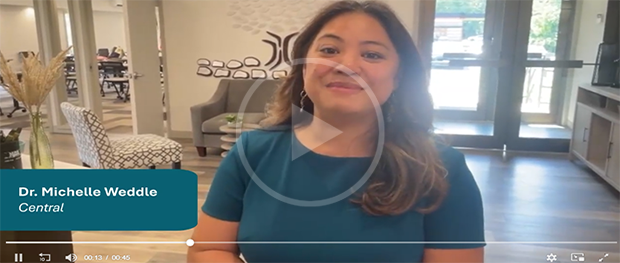
Innovation, Education & Connection at GNYDM 2026!
Explore the latest dental innovations, earn CE, network, and register FREE!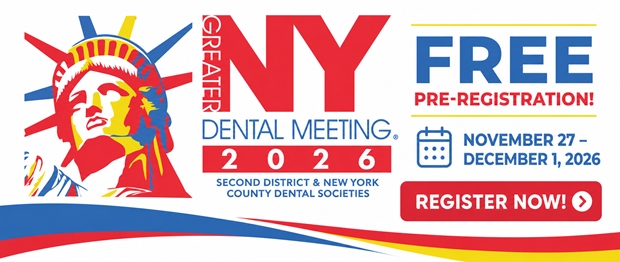
Fall Membership Drive
Get a jump start on 2027 - join local, state, and national now with no payment until January!
Save Time & Money on Dental Compliance
Provide flexible online training for the entire team, create required HIPAA and OSHA manuals and documentation, access compliance resources and more for one low price. Through December 31, 2026, New Jersey dental offices can take advantage of Early Adopter pricing on the first year of ComplyBetter NJDA.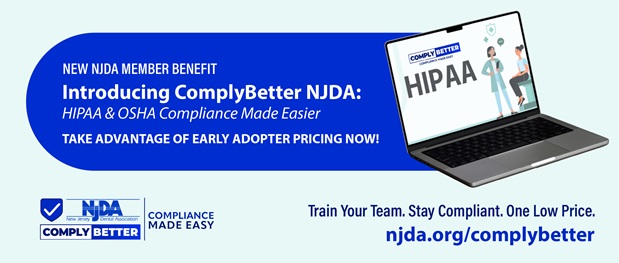
Make a Difference in Care
Help patients with special needs find a dental home. Join the NJDA’s Special Needs Provider List and connect your practice with patients and families seeking care. Sign up today.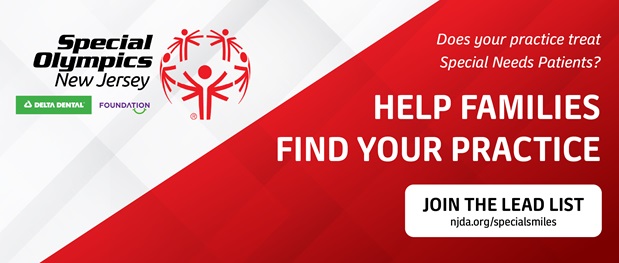
Master Claim Appeals & Radiograph Coding
Join us November 17 at 1:00 PM for Session 4 of the Dental Claims & Coding Exchange! Dilaine Gloege, CDA, CPC, will cover claim denials and appeals plus radiograph coding and frequency limits to help your team navigate common claims and coding challenges.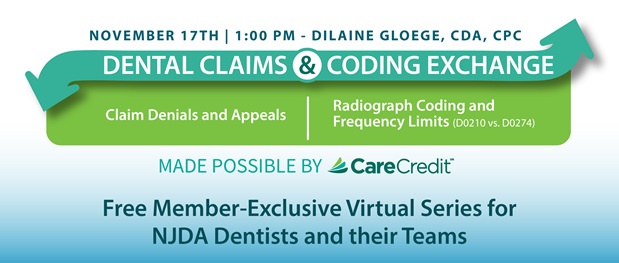
Helping Members Succeed
The New Jersey Dental Association is the voice of the dental profession and a strong proponent of oral health in the state. Members are part of a vibrant community of dentists encompassing 12 local dental societies as well as the American Dental Association. Members engage in educational programs, have access to dentist-centric relationships and tools to navigate the business of dentistry and their careers, as well as benefit from dedicated advocacy that protects the interests of the profession. The organization is run by member-dentists with the support of a team of professionals at NJDA Headquarters. NJDA members never practice alone!
UPCOMING EVENTS
Add to:
Add to:
DENTAL NEWS AND NOTES

Training Your Dental Practice Team to Combat Cyber Threats
Cybersecurity is an ongoing effort. Regular training and education are crucial to keep your practice team ahead of the evolving risks.
You and your practice staff are already on the frontlines of the fight against tooth decay. During your training to become dental professionals, you likely didn’t expect the need to master fighting cybercrime as well.
In the digital age, dental practices must fortify their defenses against evolving cyber threats. The good news is that the skills necessary to prevent cyberattack are not unlike those needed for establishing an oral health routine. Education, regular care and healthy habits top the list.
Here are several ways dental practice owners can empower their teams to enhance cybersecurity:
Education on common threats. Provide examples of phishing emails, ransomware and other types of cyberattacks to illustrate how these threats can manifest in a dental practice setting. Offer insights into the tactics cybercriminals use to deceive and compromise systems. One great resource comes from the podcast “Nobody Told Me That!” In episode 113, Teresa Pichay of the California Dental Association and Colette Johnson of TDIC share real-life stories and offer valuable insights into protecting sensitive patient information and staying compliant with HIPAA regulations.
Regular training sessions. Conduct periodic training sessions to keep your staff updated on the latest cybersecurity practices and threats. Encourage active participation and provide resources to reinforce the training material.
Simulated phishing exercises. Implement simulated phishing exercises to test your staff's ability to recognize and respond to phishing attempts. This hands-on approach allows employees to experience real-life scenarios in a controlled environment, helping them identify red flags and respond appropriately. Many cybersecurity consultants offer security awareness training and simulated phishing exercises.
Establish protocols and reporting mechanisms. Make sure your staff have clear protocols to follow in a suspected cyber threat. TDIC’s Cybersecurity Action Plan is a good place to start when establishing your own protocols. Encourage open communication and provide a straightforward reporting mechanism for any potential security concerns. Ensure all staff members understand the escalation procedures.
Access control and password management. Train your staff in secure access control and password management. Emphasize the importance of strong, unique passwords and the necessity of regularly updating them. Implement two-factor authentication for added security. To assist in creating and using strong passwords, consider using a password-saving program like LastPass or 1Password.
Software updates and patch management. Educate your team on the significance of timely software updates and patch management. Patch management is simply the process of applying updates to software, drivers and firmware for protection against possible weaknesses. In addition to enhancing security, patch management also guarantees the best operating performance of digital systems, boosting practice productivity. You can work with your IT provider on patch management, or a class of software called “managed services” can automate the process for you.
Cybersecurity best practices in patient interactions. Train staff on maintaining patient data confidentiality and secure data transmission. Highlight the significance of secure communication channels and the secure handling of patient information.
It doesn’t take a cape or mask to fight cybercrime. Cybersecurity is an ongoing effort, and regular training and education are crucial to staying ahead of the evolving risks. For additional protection, risk management experts recommend investing in the services of online security consultants, industry webinars and online training platforms that offer cybersecurity courses tailored for health care professionals.
TDIC policyholders can contact the Risk Management Advice Line for additional guidance.
For use by the California Dental Association components, the Arizona, Hawaii, Idaho, Nevada, New Jersey, North Dakota, Oregon, Pennsylvania and Washington dental associations, the Alaska Dental Society and the Illinois State Dental Society. If you wish to reprint this article, contact TDIC in advance by emailing info@tdicins.com. If you would like to request edits to this article prior to publishing, include the suggested changes in your email.

QUICK LINKS






Contact Us
Phone: 732-821-9400 or dial the Staff Directly
Fax: 732-821-1082 | Email: info@njda.org | Follow us @NJDentalAssoc
One Dental Plaza, North Brunswick, NJ 08902
