
Add to:
Member Input Needed
Learn about a proposed new approach to supporting insurance participation, reimbursement, credentialing, and more at a Regional Member Meeting this month.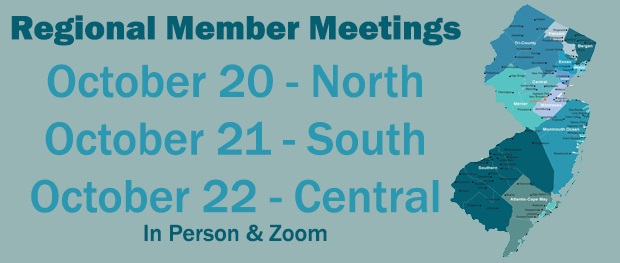
New Member Benefit Coming Soon
NJDA is excited to announce a new member benefit at the November 4 House of Delegates Meeting… watch this short video (0:45) for a hint!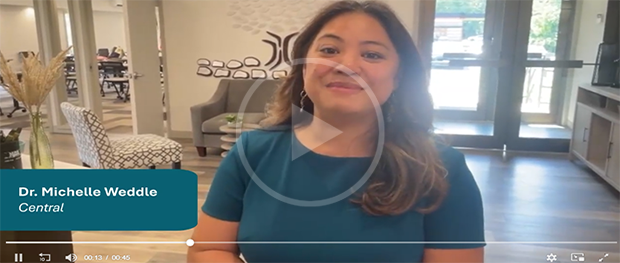
Innovation, Education & Connection at GNYDM 2026!
Explore the latest dental innovations, earn CE, network, and register FREE!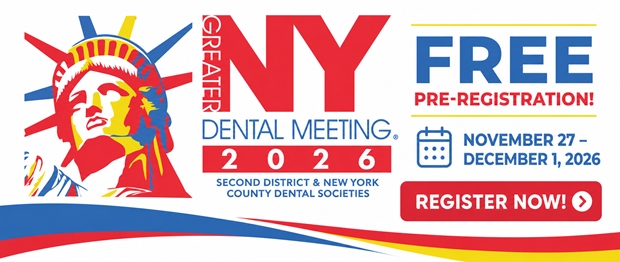
Fall Membership Drive
Get a jump start on 2027 - join local, state, and national now with no payment until January!
Save Time & Money on Dental Compliance
Provide flexible online training for the entire team, create required HIPAA and OSHA manuals and documentation, access compliance resources and more for one low price. Through December 31, 2026, New Jersey dental offices can take advantage of Early Adopter pricing on the first year of ComplyBetter NJDA.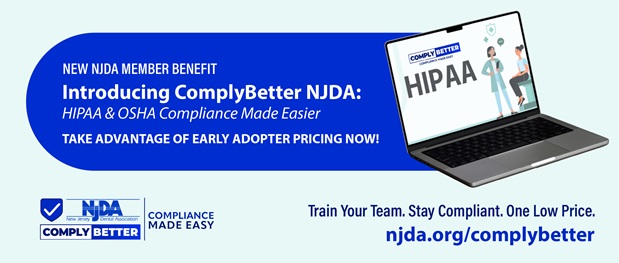
Make a Difference in Care
Help patients with special needs find a dental home. Join the NJDA’s Special Needs Provider List and connect your practice with patients and families seeking care. Sign up today.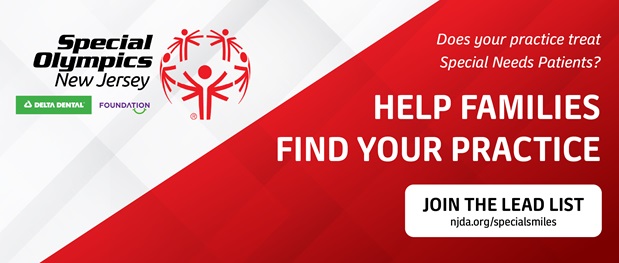
Master Claim Appeals & Radiograph Coding
Join us November 17 at 1:00 PM for Session 4 of the Dental Claims & Coding Exchange! Dilaine Gloege, CDA, CPC, will cover claim denials and appeals plus radiograph coding and frequency limits to help your team navigate common claims and coding challenges.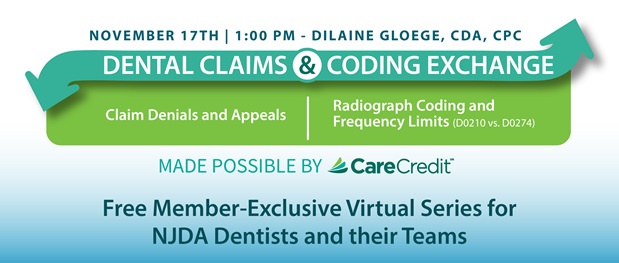
Helping Members Succeed
The New Jersey Dental Association is the voice of the dental profession and a strong proponent of oral health in the state. Members are part of a vibrant community of dentists encompassing 12 local dental societies as well as the American Dental Association. Members engage in educational programs, have access to dentist-centric relationships and tools to navigate the business of dentistry and their careers, as well as benefit from dedicated advocacy that protects the interests of the profession. The organization is run by member-dentists with the support of a team of professionals at NJDA Headquarters. NJDA members never practice alone!
UPCOMING EVENTS
Add to:
Add to:
DENTAL NEWS AND NOTES

New Jersey's Dental Workforce Has a Retention Problem. Here's What's Driving It.
Data sourced from GoTu's 2026 State of Work Report, Year 3. 400+ dental professionals across New Jersey participated. This New Jersey-specific analysis was produced in partnership with the New Jersey Dental Association.
Over 400 dental professionals across New Jersey participated in GoTu's 2026 State of Work Report, and their responses point to a workforce under real, measurable strain. Burnout is widespread, turnover is accelerating, and the professionals most essential to day-to-day practice operations are the ones with the most reasons to leave.
This is what the data shows, and what New Jersey dental offices can do about it.
Burnout Is Not a Looming Threat. It's the Current Operating Condition.
73% of NJ respondents name burnout as one of the top challenges facing the profession in the next five years. But for many, it is already here: 34% of NJ dental professionals say burnout symptoms affect their day-to-day work often or always.
The roles hit hardest are the ones practices can least afford to lose. 60% of hygienists have experienced burnout, compared to 44% of dental assistants and 33% of associate dentists. Hygienists are the clinical engine of most practices, and they are burning out at the highest rate of any role surveyed in the state.
The top two burnout drivers respondents identified are workload (67%) and physical strain (65%). These aren’t soft cultural complaints, they’re structural conditions built into how schedules are designed and how appointment time is allocated.
1 in 5 NJ Hygienists Don’t See a Future in Dentistry
22% of NJ hygienists say they do not see themselves in dentistry 10 years from now. That is the highest exit risk of any role surveyed in the state.
In practical terms: in a practice with five hygienists, at least one is already thinking past this career. The talent gap NJ dental offices have been managing through temporary coverage and extended hours is poised to worsen as experienced clinicians exit before retirement age.
The exit risk is not an abstract workforce projection. It’s visible in how NJ offices are operating right now, and it is getting worse.
NJ Dental Assistants Are Moving Between Offices at a High Rate
54% of NJ dental assistants have switched offices in the past 24 months. Of those, 41% switched once and 13% switched two or more times.
For a role that carries meaningful onboarding investment and real operational responsibility, that volume of movement is costly. Dental assistants are also experiencing burnout at a rate that, while lower than hygienists, should not be read as acceptable: 44% report burnout, driven by the same workload and culture pressures affecting the rest of the clinical team.
Turnover among assistants isn’t a separate problem. It’s part of the same pattern.
Pay Has Stalled. That Is a Retention Risk Offices Are Underestimating.
53% of NJ hygienists have not received a pay raise in 24 months. 76% of all NJ respondents receive no bonus at all.
Pay ranks fifth among the reasons NJ professionals say they stay at an office, which can look like good news for practices watching margins. But pay ranks first among the reasons they leave (46.7%). That gap tells the real story. Pay is not what holds someone at a job when everything else is working. It’s the reason they give when they finally leave.
When respondents are overworked, physically taxed, and operating in a culture they do not trust, a frozen paycheck becomes confirmation rather than a tradeoff.
What NJ Professionals Say Would Actually Keep Them
The 2026 State of Work Report didn’t only document problems. Respondents named the specific changes that would make a difference.
68% of NJ respondents identified flexible scheduling as the most-needed support for reducing burnout. Flexibility also ranks as the number one reason professionals say they stay at an office (67.6%). That isn’t a coincidence. Practices that build flexibility into their scheduling structure, rather than offering it case by case, have a concrete advantage in holding their teams.
59% of respondents cited protected time per patient as a meaningful improvement. Workload and physical strain are NJ's top two burnout drivers. Longer appointment blocks directly address both. Practices that continue compressing appointment time to maximize daily volume are making a short-term calculation with long-term team costs.
53% of respondents said investing in team culture and support would help. Toxic culture is NJ's third-ranked burnout driver, named by 57% of respondents. Culture also appears in the top five reasons professionals stay and in the top five reasons they leave. It isn’t a secondary variable. It
shows up every time a practice absorbs the cost of replacing a team member.
What the Data Means for New Jersey Dental Offices
The NJ-specific findings from GoTu's 2026 State of Work Report are direct: retention in New Jersey dental practices is not a passive outcome. It’s the result of specific, operational decisions about how schedules are built, when compensation is reviewed, how appointment time is allocated, and what kind of leadership environment professionals come to work in each day.
NJ dental professionals aren’t asking for extraordinary conditions. They are asking for schedules that respect their lives outside the office, enough time per patient to deliver quality care, and teams they can trust. The practices that provide those conditions are retaining talent. Those that don't are competing in a market where skilled dental professionals have more options than ever to find somewhere that does.
For NJ practices looking to close staffing gaps now, see how GoTu supports NJ practices. For dental professionals weighing their options, find flexible shifts near you.

QUICK LINKS







Contact Us
Phone: 732-821-9400 or dial the Staff Directly
Fax: 732-821-1082 | Email: info@njda.org | Follow us @NJDentalAssoc
One Dental Plaza, North Brunswick, NJ 08902
