
Add to:
Member Input Needed
Learn about a proposed new approach to supporting insurance participation, reimbursement, credentialing, and more at a Regional Member Meeting this month.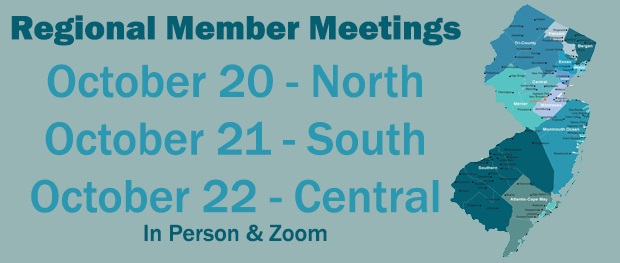
New Member Benefit Coming Soon
NJDA is excited to announce a new member benefit at the November 4 House of Delegates Meeting… watch this short video (0:45) for a hint!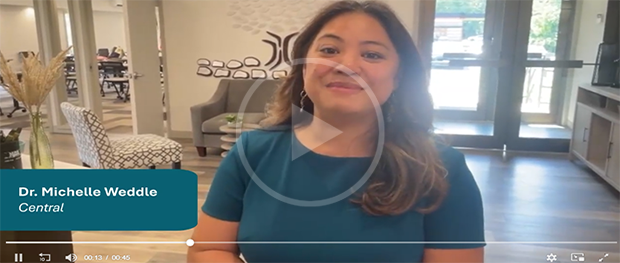
Innovation, Education & Connection at GNYDM 2026!
Explore the latest dental innovations, earn CE, network, and register FREE!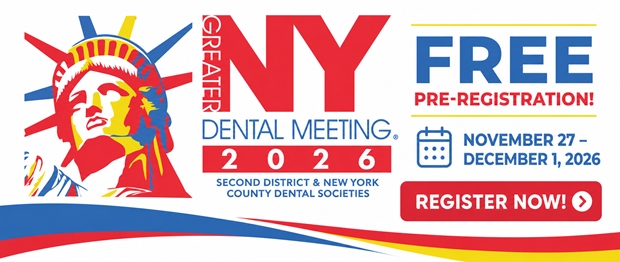
Fall Membership Drive
Get a jump start on 2027 - join local, state, and national now with no payment until January!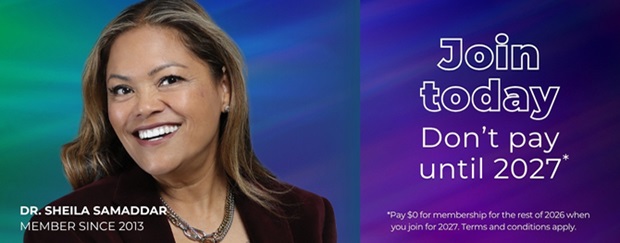
Save Time & Money on Dental Compliance
Provide flexible online training for the entire team, create required HIPAA and OSHA manuals and documentation, access compliance resources and more for one low price. Through December 31, 2026, New Jersey dental offices can take advantage of Early Adopter pricing on the first year of ComplyBetter NJDA.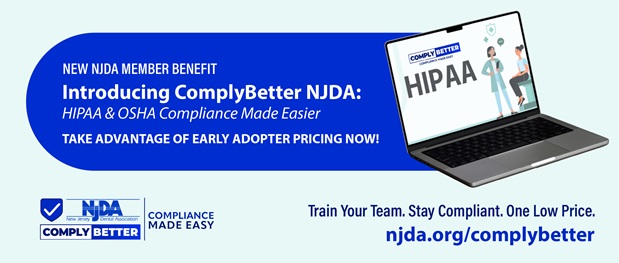
Make a Difference in Care
Help patients with special needs find a dental home. Join the NJDA’s Special Needs Provider List and connect your practice with patients and families seeking care. Sign up today.
Master Claim Appeals & Radiograph Coding
Join us November 17 at 1:00 PM for Session 4 of the Dental Claims & Coding Exchange! Dilaine Gloege, CDA, CPC, will cover claim denials and appeals plus radiograph coding and frequency limits to help your team navigate common claims and coding challenges.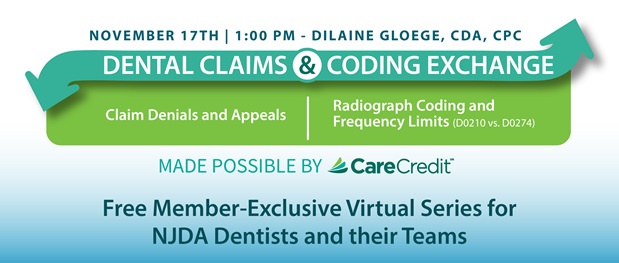
Helping Members Succeed
The New Jersey Dental Association is the voice of the dental profession and a strong proponent of oral health in the state. Members are part of a vibrant community of dentists encompassing 12 local dental societies as well as the American Dental Association. Members engage in educational programs, have access to dentist-centric relationships and tools to navigate the business of dentistry and their careers, as well as benefit from dedicated advocacy that protects the interests of the profession. The organization is run by member-dentists with the support of a team of professionals at NJDA Headquarters. NJDA members never practice alone!
UPCOMING EVENTS
Add to:
Add to:
DENTAL NEWS AND NOTES
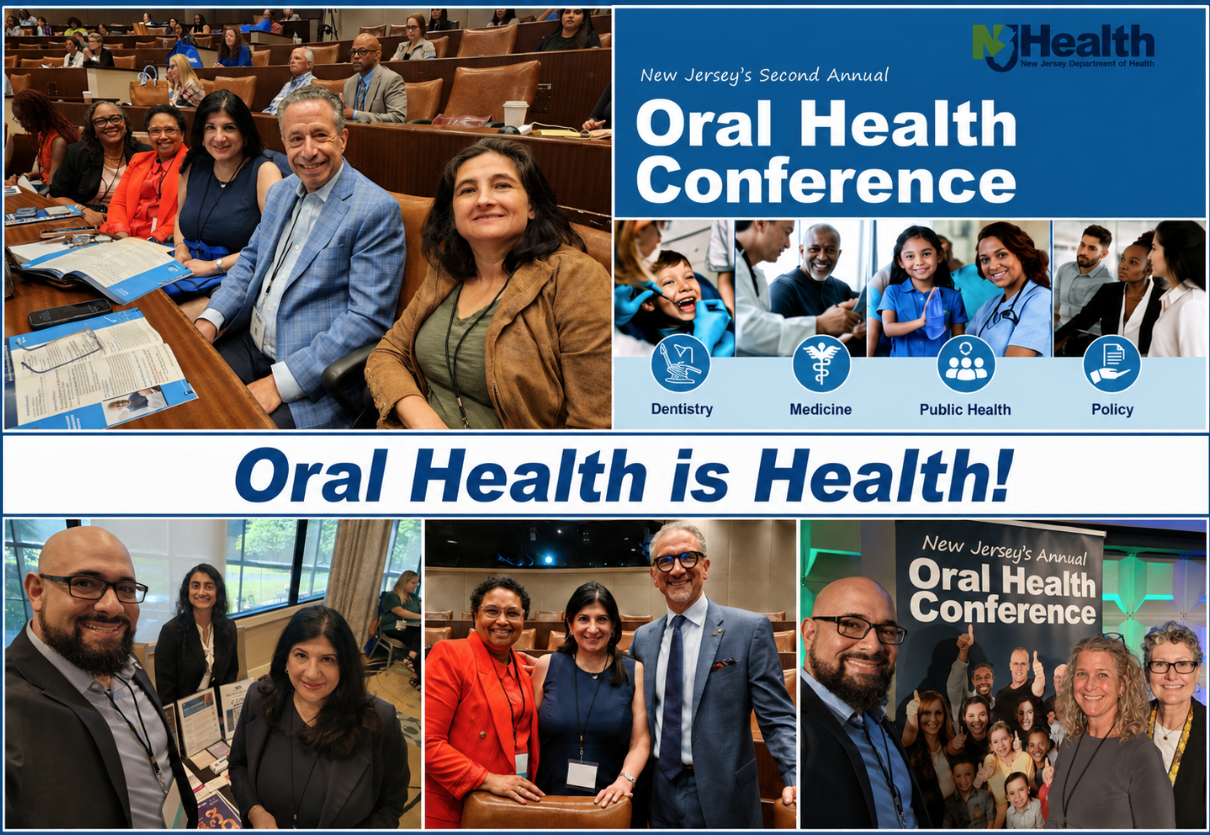
Moving the Conversation Forward
What New Jersey's Second Oral Health Conference Means for Dentists
The theme of this year's New Jersey Oral Health Conference, "Oral Health: It's Not Just About Teeth!", captured an important truth. Oral health is inseparable from overall health, influencing chronic disease, maternal and child health, mental health, and quality of life. Throughout the conference, speakers emphasized that improving oral health requires collaboration among dentistry, medicine, public health, education, and government.
If there is a single lesson the New Jersey Dental Association would draw from this day of discussion, it is this: improving access to care is not accomplished through a single policy. It requires a workforce that can meet demand, a payment system that supports rather than undermines care delivery, and collaboration across the entire healthcare community. Address one without the other and access does not improve. That framework shaped how we listened to every session.
As a member of the planning committee, NJDA was proud to help shape an event that brought together clinicians, educators, policymakers, researchers, and advocates from across the state and the nation. NJDA was also glad to administer the continuing education for the conference, providing credit to dentists, hygienists, and licensed assistants alike. Conferences like this serve an important purpose. They create opportunities to hear different perspectives, challenge assumptions, and explore new ideas in pursuit of better health outcomes for New Jersey residents.
For practicing dentists, several themes stood out, not only for what was discussed, but also for where the conversation can continue.
Workforce Requires New Thinking
Perhaps the most consistent message throughout the conference was that New Jersey's oral health workforce must evolve to meet growing demand. Sessions explored everything from public health training and interdisciplinary education to alternative workforce models and innovative approaches to delivering care.
NJDA agrees that workforce challenges are among the most significant issues facing dentistry today.
We have consistently said that New Jersey cannot simply train its way out of the workforce shortage. While expanding educational opportunities remains important, demographic shifts, retirements, geographic maldistribution, and changing career expectations require us to think differently about how care is delivered.
The question is no longer simply, "How do we produce more providers?"
It is, "How do we build a workforce that can better meet the needs of patients while maintaining the quality and continuity of care they deserve?"
That conversation should include education, licensure modernization, technology, team-based care, and reducing unnecessary barriers that prevent qualified professionals from serving patients where they are needed most. Workforce innovation is not about preserving the status quo. It is about building a stronger, more resilient oral healthcare system for the future.
Innovation Should Strengthen Patient Care
One discussion that generated considerable interest centered on alternative workforce models. The ideas continue to be debated nationally as states search for ways to expand access to care.
NJDA recognizes the importance of having these conversations. We agree that addressing workforce shortages will require innovation. The question is not whether innovation is needed, but which solutions best expand access while preserving high-quality, comprehensive patient care.
NJDA continues to support the dentist-led team models as the best approach to ensuring coordinated diagnosis, treatment planning, and long-term oral health outcomes. While we may differ on the policy solutions, forums like the Oral Health Conference create opportunities for thoughtful dialogue among professionals who share the same goal of improving access for patients.
What NJDA Is Doing to Support the Safety Net
It is fair to ask what an association of practicing dentists contributes to the safety net it talks about. NJDA has two answers, and both predate the current conversation.
The New Jersey Dental Foundation. The Foundation is NJDA's charitable affiliate, established to improve and advance the oral health of all New Jerseyans and to strengthen the dental profession in this state. Its work runs along the same lines the conference spent the day discussing. It educates the public on oral health. It works to increase access to dental care. It funds oral health research. And through grants, scholarships, and fellowships, it invests in the people who will deliver care in the years ahead.
That last piece deserves emphasis in a conversation about workforce. When we say New Jersey cannot simply train its way out of the shortage, we are not arguing that education does not matter. It matters a great deal. The Foundation supports students entering the profession, community outreach that reaches patients where they are, and innovative approaches to care delivery. If your organization is doing that work, or wants to, the Foundation's funding opportunities are open to you.
New Jersey Donated Dental Services. NJDA co-founded the Donated Dental Services program in 1988. We continue to support the program operated today through the Dental Lifeline Network, and it works the way its name suggests. Volunteer dentists provide comprehensive treatment, at no charge, to people who cannot afford care and cannot access it any other way. Most are elderly, have a permanent disability, veterans or are medically fragile.
In the years since, the program has delivered nearly $30 million in donated treatment to roughly 9,900 New Jersey residents. It runs on more than 500 volunteer dentists and 95 dental laboratories, in every county of the state. There is no grant cycle behind most of it and no reimbursement. There are dentists who decided that a patient in front of them was going to be treated.
We raise this not as a credential. We raise it because it establishes where we sit in this conversation. When both the workforce system and the payment system fail a patient, that patient does not disappear. They arrive at a health center, an emergency department, a free clinic, or a volunteer dentist's chair. NJDA through the Dental Lifeline Network has been catching some of them for nearly four decades, and we have a fairly clear view of who they are.
Which is why the next part of this discussion matters as much as it does.
Access to Care Is Also an Economic Conversation
Programs like these are essential, and they are not a solution. When the safety net grows, it is usually because something upstream is failing.
Many conference sessions appropriately highlighted public health initiatives, grant-funded programs, community partnerships, and philanthropic efforts that improve access for underserved populations. These programs reach patients who would otherwise go without care, and they deserve the support they receive. But the need they absorb is a signal worth reading carefully.
The vast majority of oral healthcare in New Jersey is delivered through private dental practices, and any comprehensive discussion about access should acknowledge the financial realities facing them. Reimbursement has not kept pace with the increasing cost of delivering care. Staffing costs, supplies, technology, regulatory requirements, and inflation continue to place pressure on practices across the state. When reimbursement no longer reflects the cost of providing quality care, dentists face difficult decisions about participating in networks. As more practices leave those networks, patients experience reduced access despite technically having coverage.
This is where Medicaid belongs in the conversation, and it is worth being precise about it. Medicaid is often discussed as a public health program alongside grants and charitable care. In practice, it is a payment system, and it exhibits the same structural problem as commercial coverage: when reimbursement falls below the cost of delivering care, providers cannot sustainably participate. Only about 27 percent of New Jersey dentists participate in Medicaid at all. That is not a failure of willingness. It is what happens when the economics do not work. Different patients, same cause, same result.
Similarly, many patients remain underinsured because annual maximum dental benefits have remained largely unchanged for decades despite significant increases in the cost of care. Having dental insurance does not always mean patients can afford the treatment they need.
The consequences are not evenly distributed. Thirty-six percent of New Jersey third graders have untreated tooth decay, compared with roughly 20 percent nationally, and rates are higher among Black and Hispanic children and children in lower-income schools. Workforce shortages and payment shortfalls reinforce each other in exactly the communities that can least absorb them. Coverage on paper is not the same as care in a chair.
These economic realities are not separate from the access-to-care discussion. They are central to it. A sustainable oral healthcare system requires public investment and community partnerships, and it requires a private practice environment that enables dentists to continue serving their communities.
Collaboration Drives Better Policy
Perhaps the conference's greatest strength was not that everyone agreed. It was that so many stakeholders came together to engage in respectful dialogue.
Dentists, hygienists, educators, physicians, insurers, legislators, public health leaders, community organizations, and patients all bring valuable perspectives to the table. While opinions may differ on the best path forward, meaningful progress depends on our willingness to listen, challenge assumptions, and work toward shared solutions.
That is exactly what this conference accomplished.
At NJDA, we believe our responsibility is not simply to advocate for the profession, but to ensure that the voice of practicing dentists remains part of the conversation as New Jersey shapes the future of oral health. Dentists bring a unique perspective from caring for patients every day. They understand not only the clinical needs of those they serve, but also the operational, workforce, and financial realities that determine whether care remains accessible.
We will continue engaging with partners across healthcare, listening to different viewpoints, and advancing policies that improve access while supporting a sustainable, patient-centered oral healthcare system.
The Second New Jersey Oral Health Conference reminded us that oral health is about far more than teeth. It is about collaboration. It is about innovation. It is about ensuring that every New Jersey resident has access to high-quality oral healthcare.
Most importantly, it reminded us that meaningful progress begins with meaningful conversation.
NJDA looks forward to continuing that conversation and helping move it forward.
QUICK LINKS




Contact Us
Phone: 732-821-9400 or dial the Staff Directly
Fax: 732-821-1082 | Email: info@njda.org | Follow us @NJDentalAssoc
One Dental Plaza, North Brunswick, NJ 08902
